
Improve Your Trade Show ROI
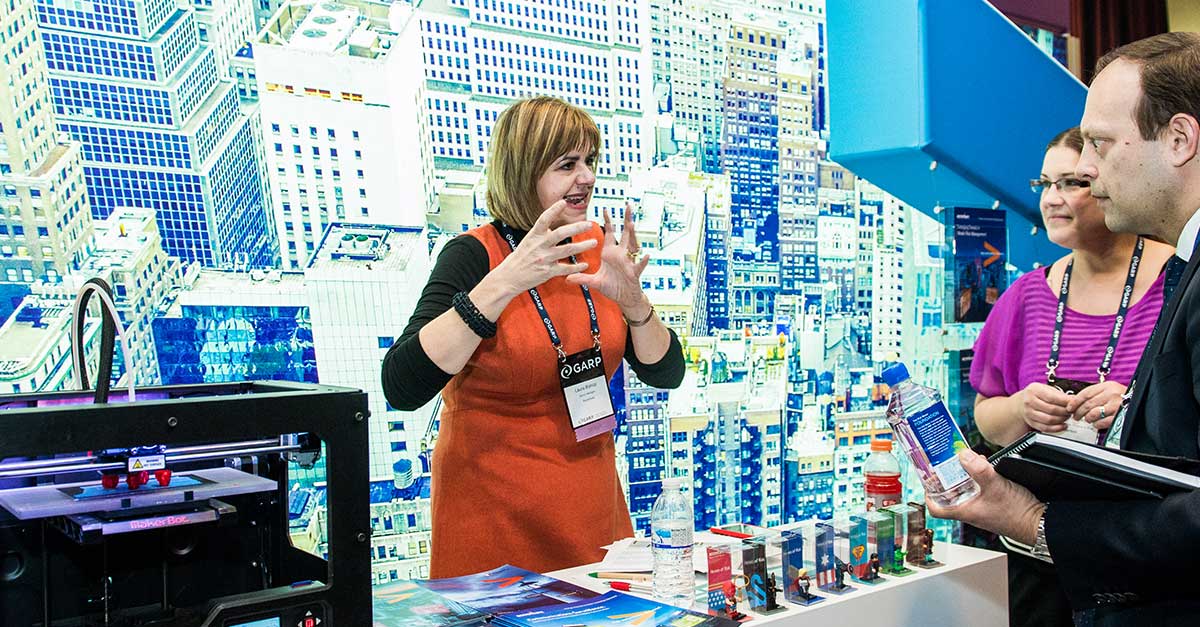
Inside You'll Find:
- Proven tactics to determine the opportune trade show or event
- Marketing examples that increase ROI and make every interaction count
- Strategies for measuring your trade show ROI to empower you to make data-driven decisions
- And much more!
Download the updated e-book today and take the first step toward achieving your marketing objectives and make each event a resounding success!
Get The Free Trade Show ROI Playbook
Trade shows and face-to-face marketing events can be a key strategy for achieving overall sales and marketing success. This free Trade Show ROI Playbook will help you score big with concise, real-world steps you can take to improve return at your next trade show or event. Complete the form to receive your free Trade Show ROI Playbook today.
Frequently Asked Questions About Trade Show ROI
What does a strong trade show's ROI strategy look like today?
A modern trade show's ROI strategy evaluates more than direct revenue alone. Many organizations now assess trade show ROI using a combination of pipeline influence, customer engagement, relationship development, media visibility, and long-term brand positioning. Event marketing teams increasingly apply the same level of measurement and accountability to trade shows that they use for digital campaigns and advertising programs.
Successful trade show ROI planning also requires clearly defined objectives before the event begins. Establishing measurable goals helps companies evaluate performance consistently while improving marketing spend justification and long-term decision-making. A structured ROI measurement framework creates stronger alignment between sales, marketing, and leadership teams. Additional planning frameworks and ROI strategy examples are also available in the downloadable Trade Show ROI Playbook featured above.
Why is measuring trade show ROI important?
Measuring trade show ROI helps organizations understand whether events are contributing to broader business and marketing objectives. Without consistent evaluation, it becomes difficult to compare performance across shows or identify where improvements are needed.
Many exhibitors use trade show performance metrics such as lead quality, booth traffic, pipeline influence, meeting volume, and customer engagement to support more accurate trade show performance analysis. Consistent event outcome tracking also improves future planning and helps companies refine their overall ROI-driven event strategy.
How should companies set goals before committing to a trade show?
Clear objectives are essential for maximizing event ROI. Goals influence exhibit size, staffing decisions, engagement tactics, and follow-up strategies long before the event begins. Without defined expectations, evaluating results often becomes subjective.
Many organizations establish trade show success metrics tied to lead generation, relationship development, customer retention, or brand awareness. Aligning these objectives with broader company priorities also strengthens marketing performance accountability across departments. Companies looking for a more structured framework can also use the downloadable Trade Show ROI Playbook to help define measurable event goals, budgeting priorities, and post-show evaluation criteria.
How do companies choose events based on ROI potential?
A data-driven tradeshow strategy focuses on audience quality and business alignment rather than event popularity alone. Companies often evaluate attendee demographics, exhibitor participation, educational programming, and past performance before selecting an event. The Trade Show ROI Playbook also outlines practical evaluation criteria companies can use when comparing event opportunities and prioritizing future trade show investments.
Strategic event selection helps organizations prioritize opportunities that support stronger trade show investment analysis and long-term growth. In many cases, smaller targeted events may produce stronger results than larger shows with broader audiences.
Why is strategic event investment planning important?
Strategic event investment planning helps companies align budgets, staffing, logistics, and exhibit design with measurable business goals. Accurate budgeting also improves trade show ROI calculation by ensuring organizations account for the full cost of participation before evaluating results afterward.
Strong strategic event investment planning also improves resource allocation for events by helping organizations prioritize staffing, budgets, and exhibit resources across multiple trade shows throughout the year. For organizations building a more consistent event planning process, the downloadable Trade Show ROI Playbook provides additional guidance on budgeting, staffing alignment, and long-term event strategy development.
How can exhibitors maximize trade show ROI before the event starts?
A significant portion of event ROI is influenced before attendees ever arrive on the show floor. Pre-event outreach, meeting scheduling, promotional campaigns, and targeted messaging all contribute to stronger engagement during the event itself.
Many organizations focused on maximizing trade show ROI use pre-show marketing efforts to increase appointment volume, improve attendee awareness, and drive more qualified booth interactions once the event begins. The Trade Show ROI Playbook includes additional examples of pre-show marketing tactics and engagement strategies that can help improve appointment quality and attendee interaction before the event begins.
How does booth engagement affect trade show performance?
Strong booth engagement directly influences lead quality, follow-up effectiveness, and overall trade show performance analysis. Staff alignment, attendee interaction, and presentation quality all contribute to how visitors experience the exhibit environment.
Companies that prioritize meaningful conversations and structured engagement strategies often see stronger tradeshow ROI than organizations focused only on overall traffic volume.
What role does media exposure play in trade show ROI?
Trade show ROI opportunities often extend beyond the attendees physically present at the event. A strong event media strategy can expand visibility through media coverage, interviews, social sharing, and post-event content that continues reaching audiences long after the show ends. These efforts help support brand awareness, thought leadership, and broader trade show publicity beyond the exhibit floor itself.
Many organizations use pre-event outreach, press materials, customer interviews, and post-show amplification to increase visibility before, during, and after an event. Because non-attendees may still engage with event-related content digitally, media engagement can become a measurable contributor to long-term ROI and overall event impact analysis.
How should companies measure and validate trade show ROI after an event?
Trade show ROI should be validated after the event using structured evaluation rather than assumptions. Many organizations review sales opportunities, lead quality, booth engagement, media exposure, digital interaction, customer meetings, and relationship-building outcomes to assess overall performance. Consistent event outcome tracking helps teams understand which activities contributed most to event success.
A complete trade show ROI calculation often includes assigning estimated values to measurable outcomes wherever possible. This creates more standardized trade show performance analysis across multiple events and helps companies improve future event selection, budget planning, and strategy refinement. Over time, consistent evaluation supports event success forecasting, improves marketing event optimization, and transforms individual events into a repeatable framework for stronger long-term planning and continuous improvement.